The Story of Bayard
Antique Village
Before it was a village of antique cottages, it was a motor court where families stopped for the night on the long drive south. This is how it survived.
Bayard, Florida · 1884 to today
One hundred years, one corner
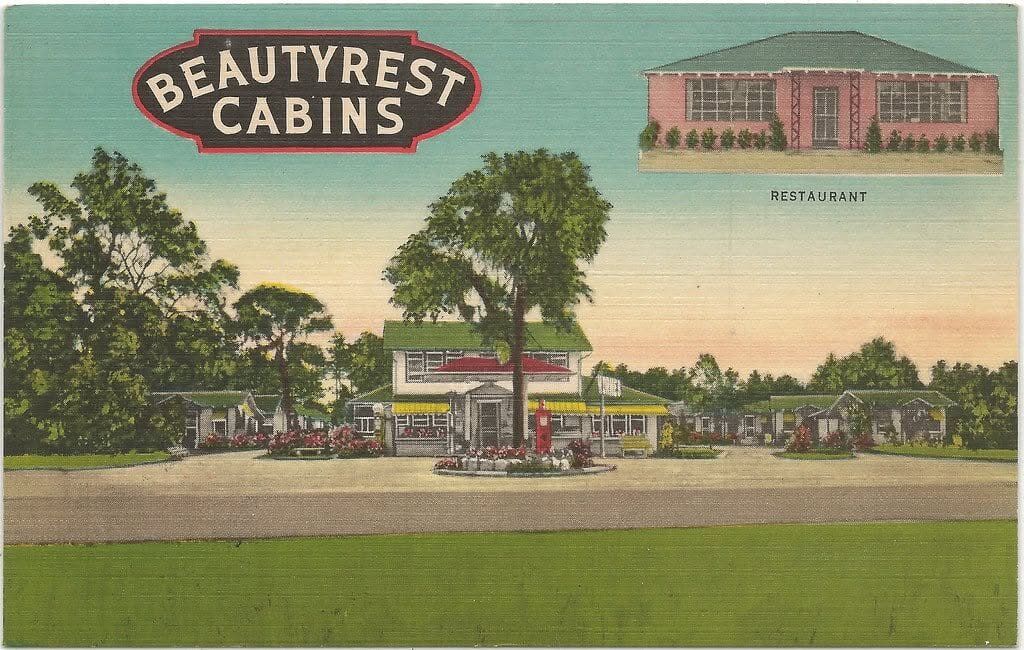
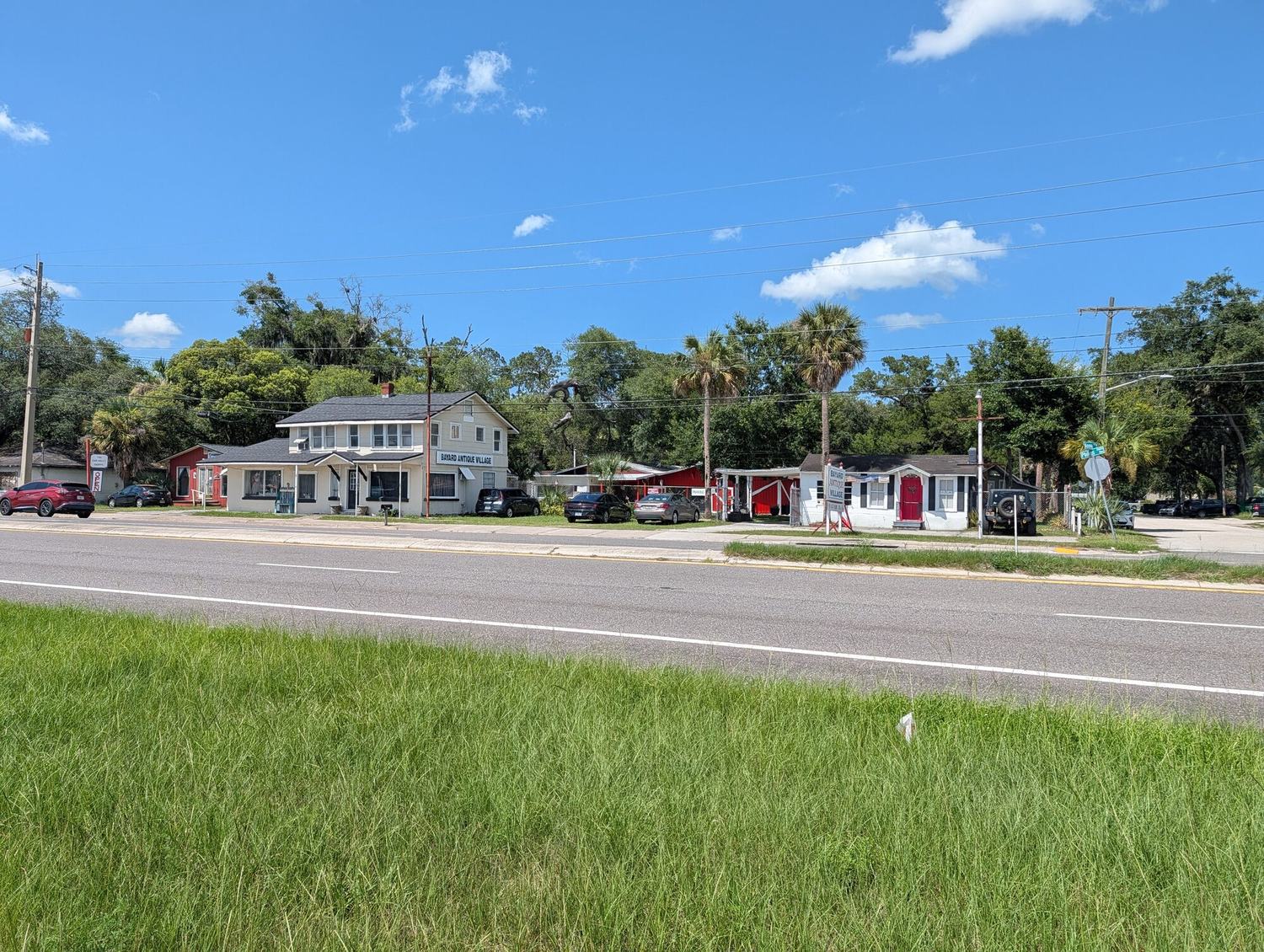
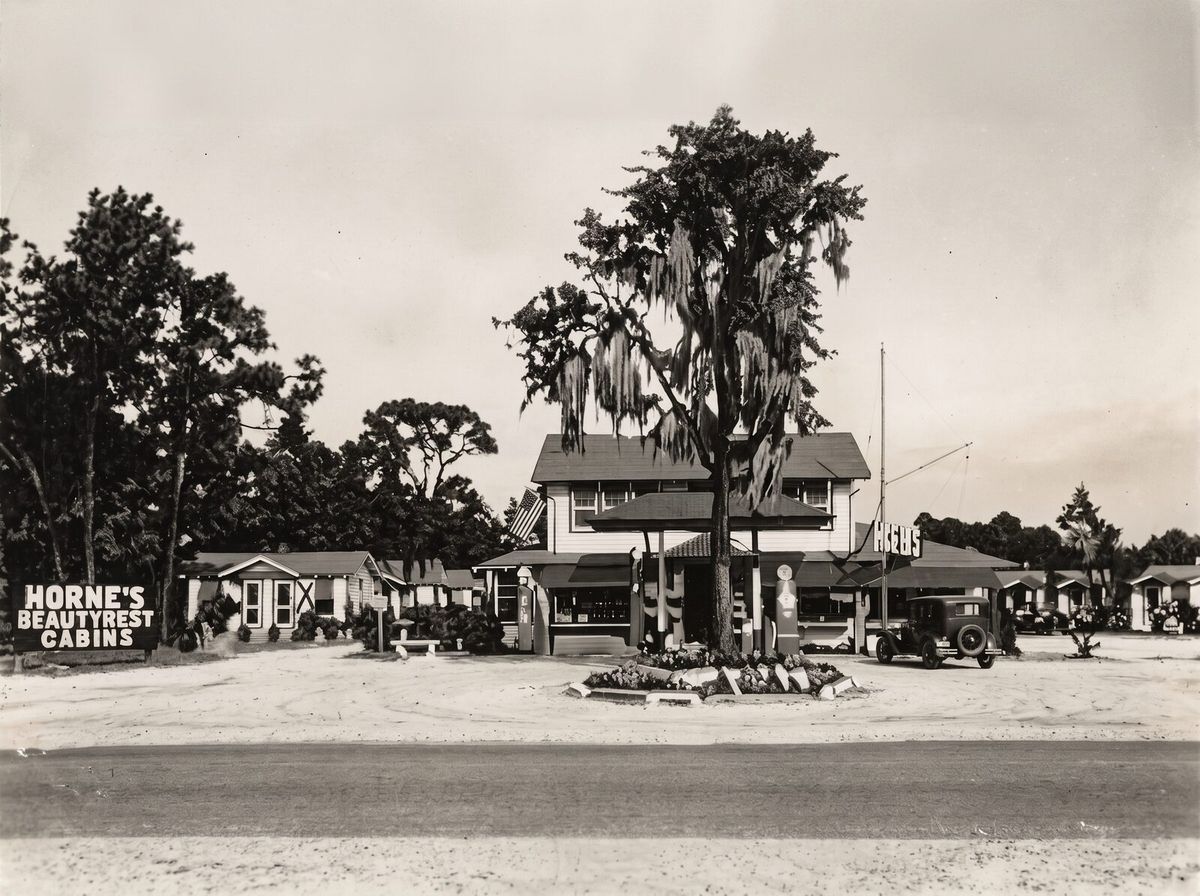
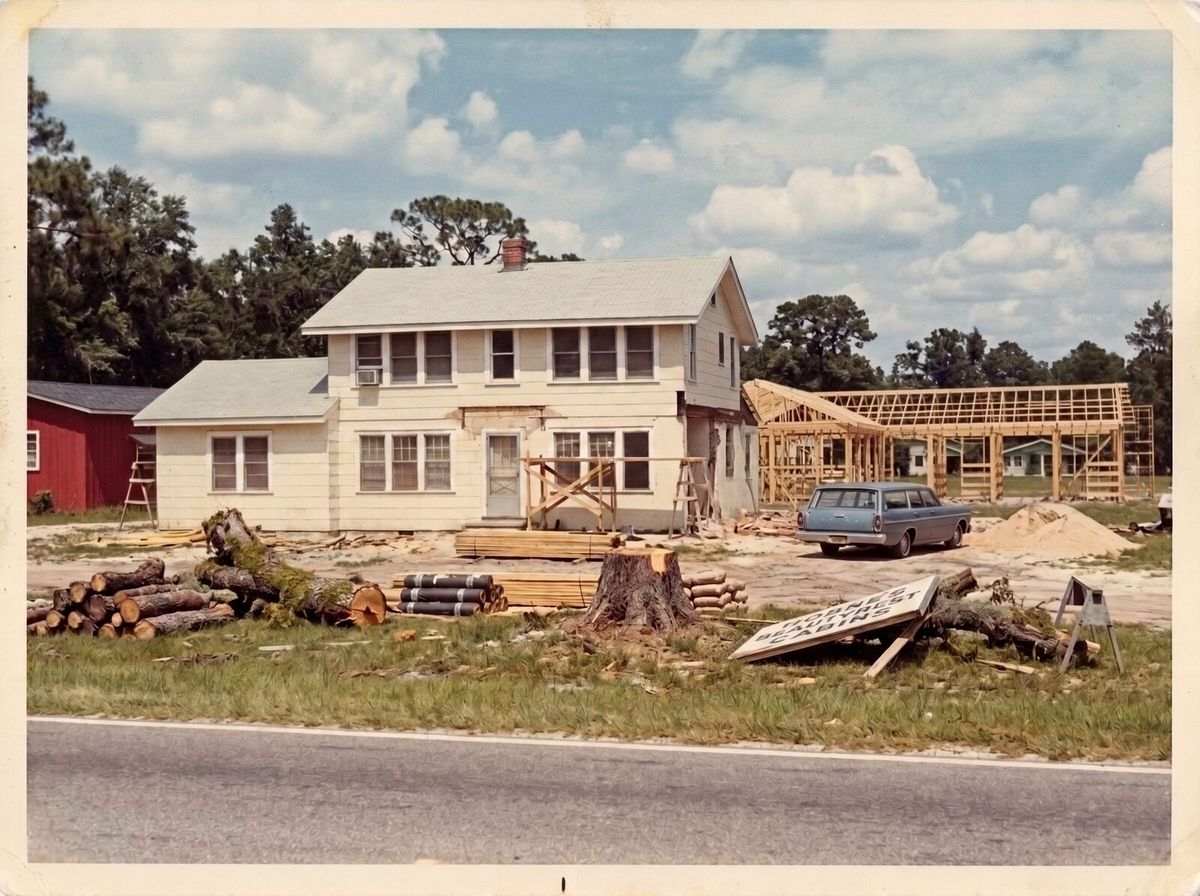
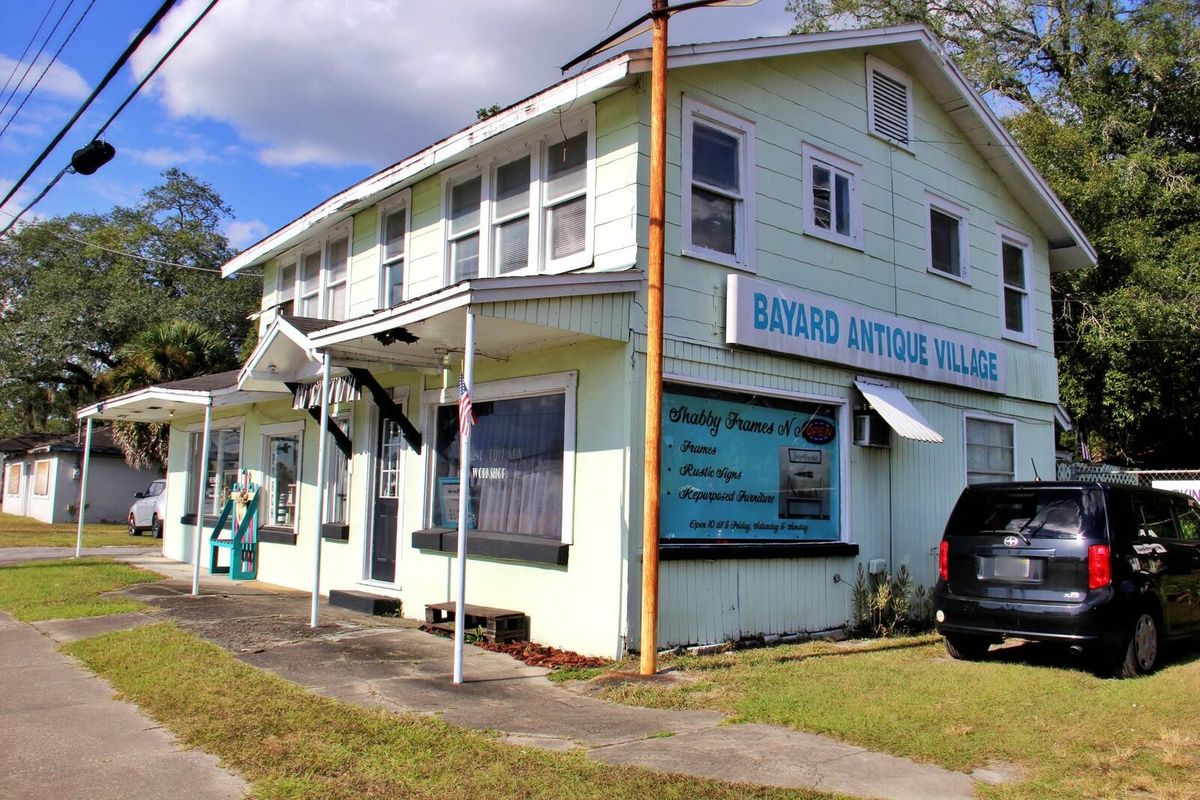
A postcard from the days when this was a motor court on US-1, and the same place as it stands today. Nearly a century apart, and still the same buildings.
a hundred years apart
I paint furniture for a living, so I am fond of things that get a second life. It took me a while to realize I was working inside one.
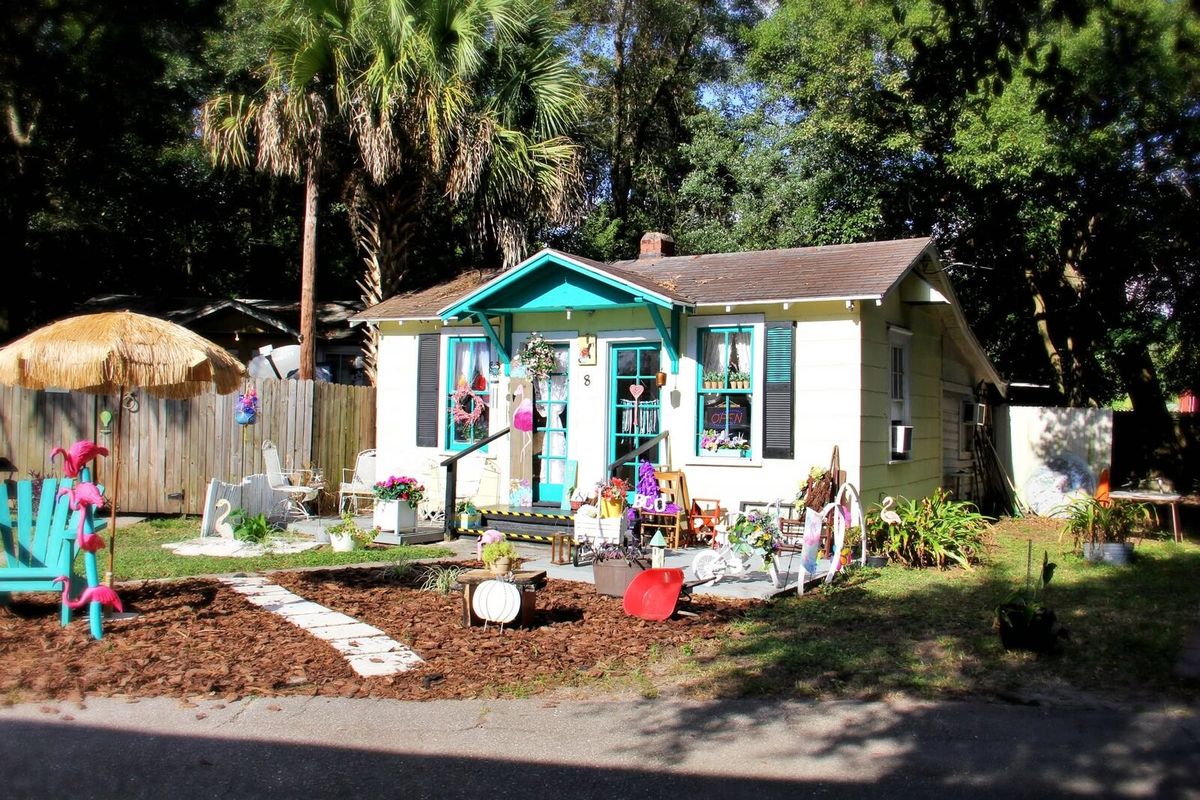
The little cottage that holds my studio was not built to be a shop. Almost none of them were. Bayard Antique Village started out as a roadside motor court, and the buildings people wander between on a Saturday afternoon were once rooms you rented for the night, with a garage you could lock and a bath with real tile in it. The whole village is a piece of furniture that somebody refused to throw away.
A hundred and forty years on one corner
- 1884
A depot town is platted
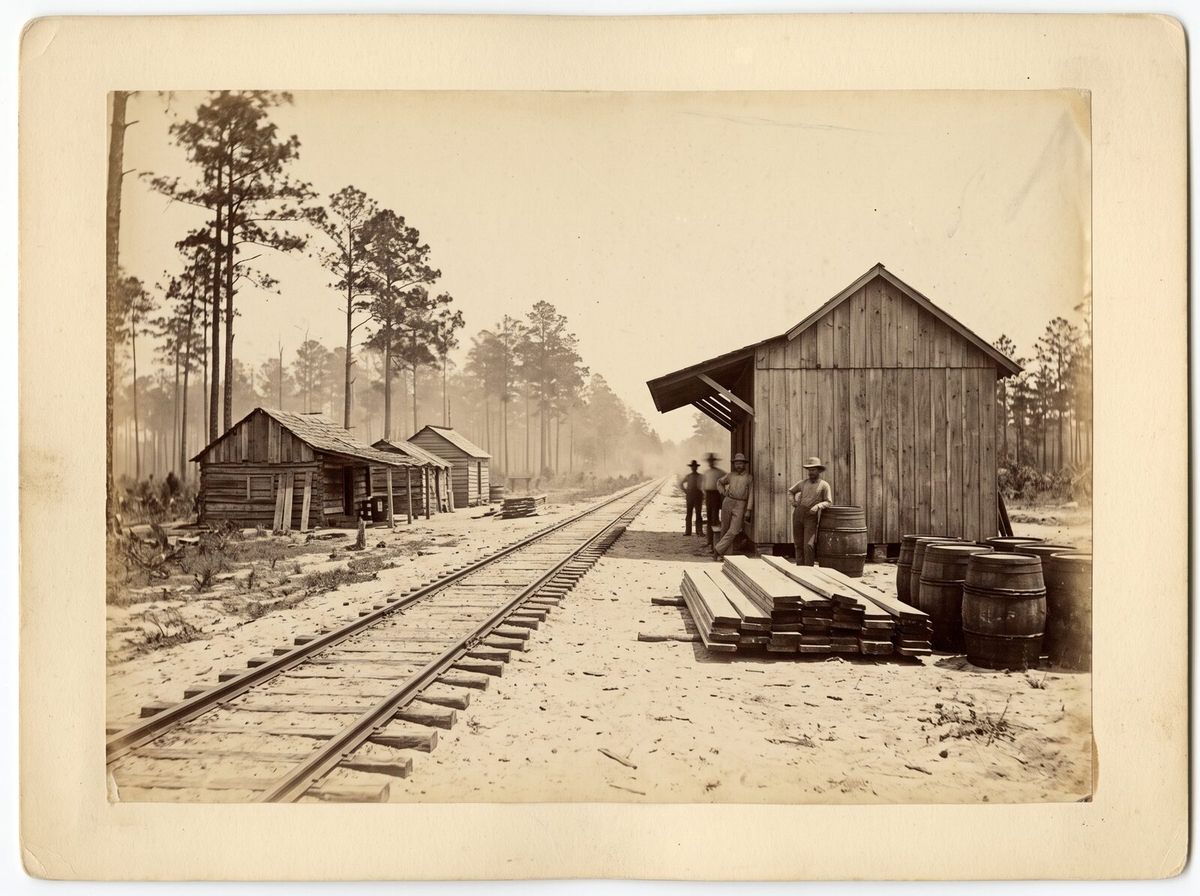
Bayard is laid out along the new Jacksonville, St. Augustine & Halifax River Railway, a narrow-gauge line running south from Jacksonville. Sawmills and turpentine stills surround it. For a while, it is a place where things stop.
- 1921
The Beautyrest Cabins are built
A motor court rises on US-1, fifteen miles south of Jacksonville, the year confirmed by the property deeds. Duo-Therm heated cottages, private tile baths, a dining room, locked garages. It is built for a brand new kind of traveler: the family with a car and a long drive to Miami.
- Late 1920s
Horne's candy factory
The Horne family builds a candy factory here beside the cabins. Bob Horne's pecan candy business grows into a chain of Horne's tourist stores across the South, and it all traces back to this stretch of highway.
- 1948
Fire takes the factory
The candy factory closes after a fire, according to local historians. The roadside heyday of the property begins to fade.
- 1950s to 60s
Vivian Searcy's storage
I-95 is built a few miles west, and the traffic that fed every motor court on US-1 stops coming. As the cabins go quiet, local lore holds that antique dealer Vivian Searcy begins using them to store her antiques.
- 1967
The village is born
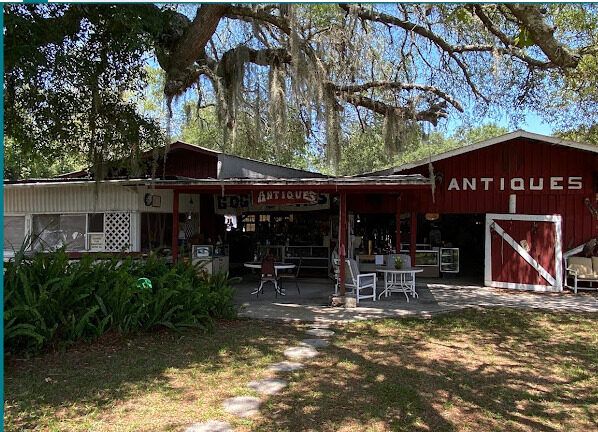
Vivian Searcy reopens the property as an antique village. She builds the big central Barn and takes down the old restaurant attached to the Main House. One by one, the cabins on the perimeter become independent shops.
- Today
Fourteen cottages, still standing
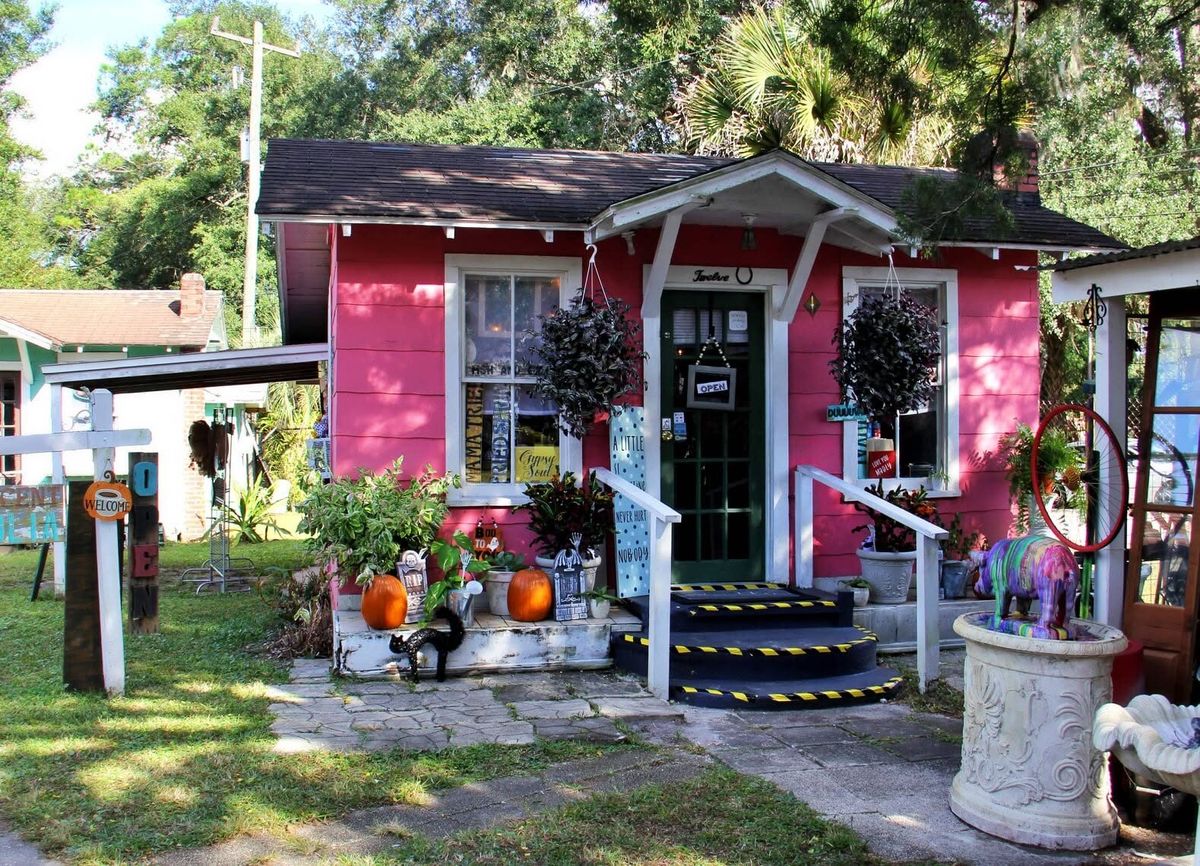
The cottages are still cottages. The Barn is still the Barn. Vendors sell antiques, vintage, and handmade work, and the Main House is home to Shabby Frames N More.
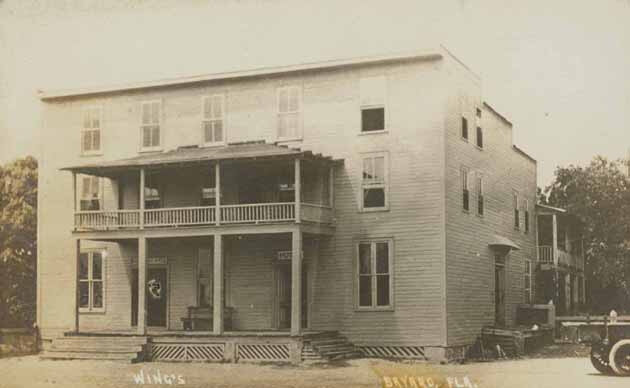
The town before the motor court
This is not the antique village. It is the town the village grew up in, back when Bayard was a stop on the railroad and the cabins were still decades away.
A good night's sleep on the way to Miami
In the 1920s, US-1 was the road south. Not one option among several, the road. Every family driving from the northeast to St. Augustine or Miami came through Bayard, and they needed somewhere to sleep before they got there.
The Beautyrest Cabins were built for exactly that traveler in 1921, a date the property deeds still confirm, and the old postcard advertising them still lists what mattered in 1930s Florida:"Duo-therm-heated cottages, private tile baths, hot and cold water, dining room, locked garages, trailer accommodations." The proprietors are printed right on the card: Mr. and Mrs. A. I. Horne.
It also picked up a reputation as a honeymoon stop, which is easy to believe. Sixteen little cottages under the pines, far enough from the city to feel like you had gotten somewhere.
It started with pecans
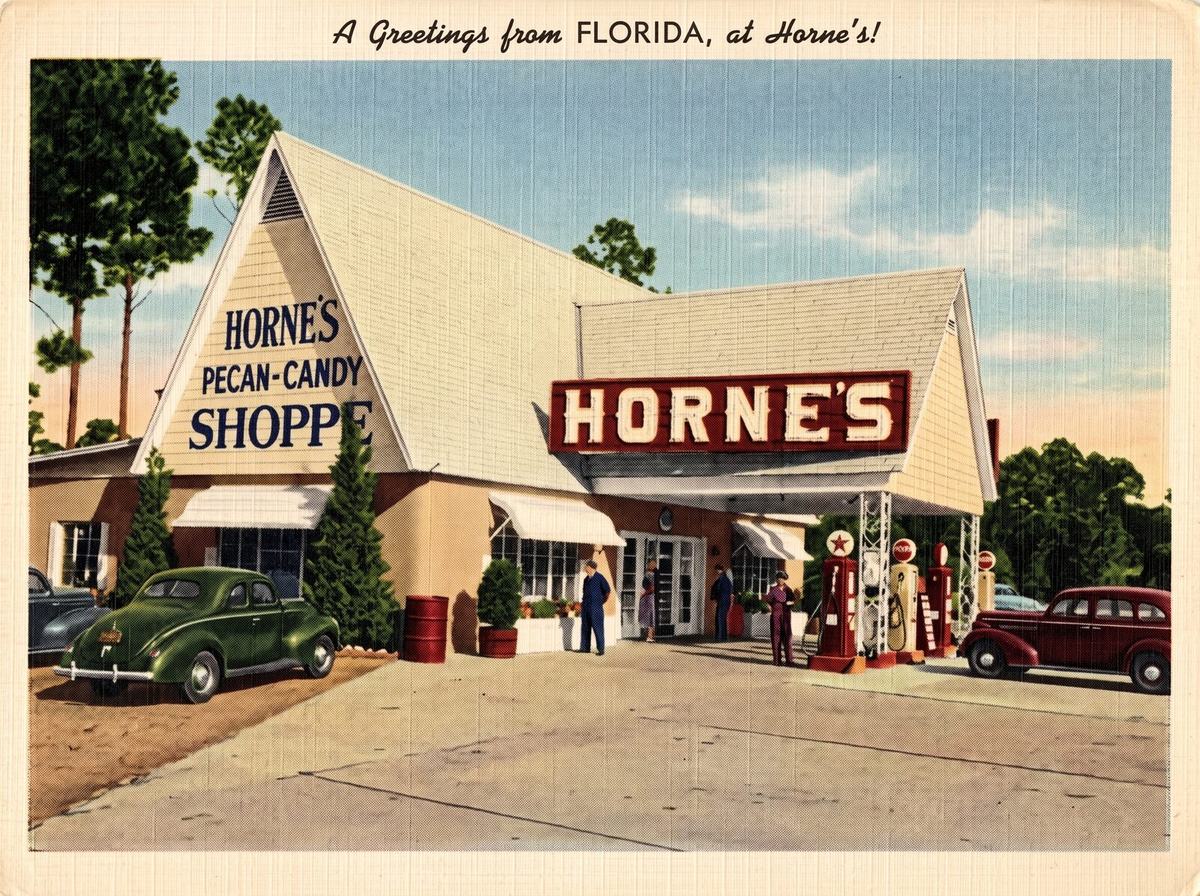
Bob Horne had been selling pecan candy to Stuckey's, the roadside stores that were everywhere on southern highways. In the late 1920s the Horne family built a candy factory here beside the cabins, and it grew into Horne's, a chain of tourist candy and souvenir stores that spread across the South.
All of it traces back to this address, which I find genuinely remarkable for a corner of Jacksonville most people drive past without looking. This was roadside Florida at full volume: candy counters, souvenirs, hand-painted signs promising something worth pulling over for.
The factory's run ended in 1948, when local historians say a fire brought it to a close. It was the beginning of the end for the property's roadside heyday.
What the interstate took
I-95 went in a few miles west, and that was that. The thing about a business built on people driving past your door is that it only works while they are driving past your door. Motor courts up and down US-1 closed within a few years of the interstate opening, and most of them were torn down, paved over, or left to fall in.
The Beautyrest Cabins should have gone the same way. Sixteen small buildings with no purpose, on a road nobody needed anymore. Through the 1950s and 60s, as local lore tells it, antique dealer Vivian Searcy quietly used the empty cabins to store her antiques, which turned out to be exactly the idea that saved them.
Vivian Searcy had a different idea
Instead of clearing the cabins, she kept them and changed what they were for. The property reopened as an antique village, the big central Barn went up, the old restaurant attached to the Main House came down, and the little cottages around the edge became shops, each one run by somebody different.
Same buildings, brand new life
So who was Bayard, anyway?
Officially, the community takes its name from Thomas F. Bayard, the Delaware statesman and Secretary of State. The City of Jacksonville says so, and a 1939 federal survey of Florida credits railroad magnate Henry Flagler with bestowing it.
That has never fully settled the matter locally. Since at least 1939 there have been Jacksonville folks who will tell you, with total confidence, that it was actually named for Bayard Clinch, son of General Duncan Lamont Clinch. I have no dog in this fight. But if you bring it up at the village on a slow Sunday, someone will have an opinion.
The years nobody photographed
Only a handful of genuine photographs of this place survive. For the stretches in between, here is how it might have looked, reimagined from the descriptions and the old postcards.
These are AI-assisted artistic illustrations, not historical photographs.
Still here, still standing
The cabins are cottages now, the Main House still watches the highway, and the Barn Vivian Searcy built holds antiques instead of auctions. Here it is on a recent afternoon.
How I ended up in the Main House
There is a particular pleasure in stripping something back and finding out what it used to be. I get to do that to furniture every week, in a building that had it done to itself.
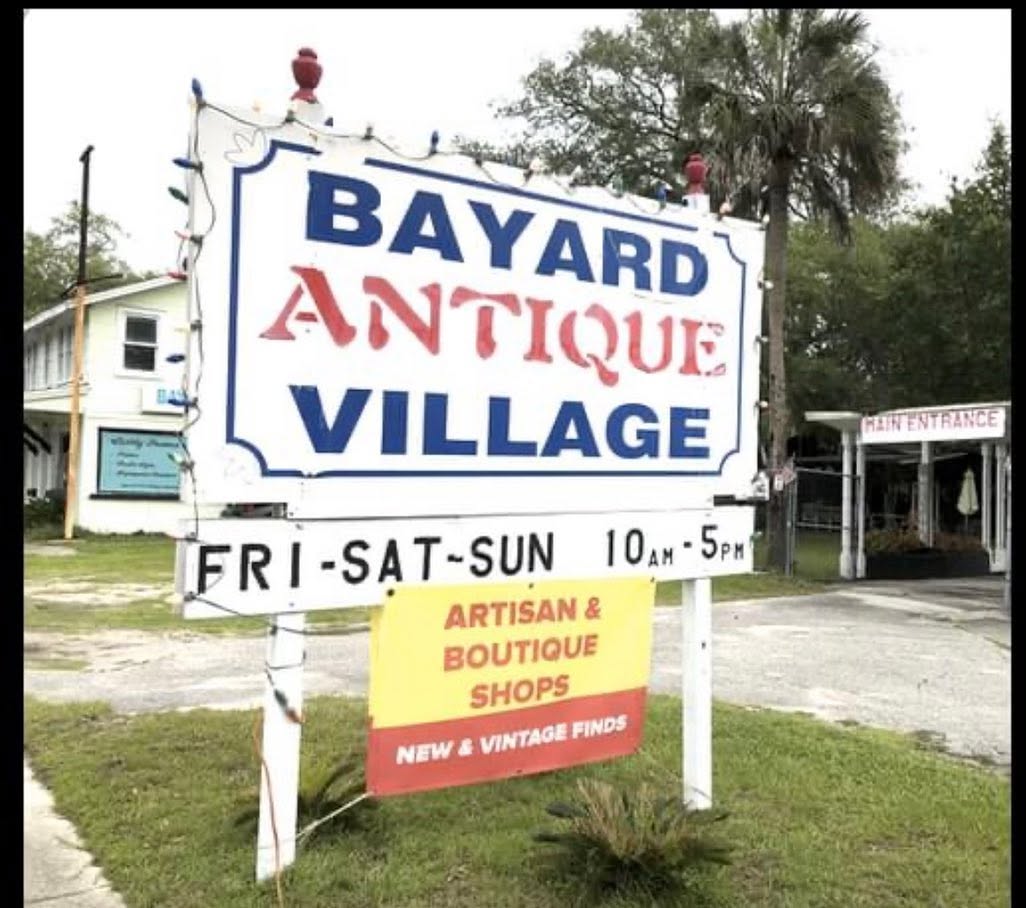
If you come out on a Friday, Saturday, or Sunday, the village is open ten to five. Come find me in the Main House. I am always happy to talk Fusion Mineral Paint, and now you know what you are standing in.
Bayard Antique Village, answered
When was Bayard Antique Village built?+
The buildings began as the Beautyrest Cabins, a motor court built on US-1 in 1921, a date confirmed by the property deeds. The site became Bayard Antique Village in 1967.
What was Bayard Antique Village before it was an antique village?+
It was a roadside motor court called the Beautyrest Cabins, later run by the Horne family, who also built a pecan-candy factory beside it. After Interstate 95 drew traffic away from US-1, the cabins were converted into an antique village in 1967.
Who started Bayard Antique Village?+
Antique dealer Vivian Searcy. Local lore holds that she first used the empty cabins to store her antiques, and in 1967 she reopened the property as an antique village, built the central Barn, and removed the old restaurant from the Main House.
What was Horne's in Bayard, Florida?+
Horne's began with Bob Horne selling pecan candy on US-1. The Horne family built a candy factory beside the Beautyrest Cabins in the late 1920s, and Horne's grew into a chain of roadside candy and souvenir stores across the South. The Bayard factory closed after a fire in 1948, according to local historians.
Who was Bayard, Florida named after?+
Officially, the community is named for statesman Thomas F. Bayard, a name a 1939 federal survey credits Henry Flagler with bestowing. A long-standing local tradition instead credits Bayard Clinch, son of General Duncan Lamont Clinch.
Where is Bayard Antique Village and when is it open?+
Bayard Antique Village is at 12561 Philips Highway, Jacksonville, FL 32256, and is open Friday, Saturday and Sunday from 10am to 5pm.
Sources & further reading
Local history is a patchwork, and accounts of this site disagree on some details. I have leaned on the sources below, along with the property deeds and the knowledge of local historians, and flagged the story of the town's name as the open question it is. If you know this place better than I do, or have photographs from its earlier lives, I would love to hear from you.
Keep Exploring
Our Story
How Shabby Frames N More came to be, and the belief that almost nothing is truly worn out.
Meet Charlotte →Visit the Studio
Find us in the Main House at Bayard Antique Village, open Friday through Sunday.
Plan Your Visit →Before & After
See what a second life looks like on furniture, not buildings.
See Makeovers →